In today’s dynamic work environment, where remote and on-site work often intertwine, having an office that inspires and enhances productivity is a must – and this rings true whether you’re a WFH aficionado or an in-person professional. One key element in creating such a workspace is your choice of flooring. Here, we’ll explore a selection of the best flooring ideas for offices (both commercial and home studies) that will elevate workplace creativity to a whole new level.
Why choosing the perfect office flooring matters
The impact of a good quality floor can’t be overstated and yet this is often overlooked. To pave the way for a functional and aesthetically pleasing space, we need to work from the ground up – and by that, we mean the floor.
From the structural elements such as office layout (think open-plan offices vs traditional cellular designs) and underfloor insulation right up to visuals including colour, texture and pattern, the choice of office flooring is integral to creating a workspace that not only looks good but also enhances comfort, safety, and overall productivity.
A carefully selected office flooring will enhance the workplace ambience and reflect a company’s brand identity if a shared, company HQ. In fact, numerous studies demonstrate that things as simple as lighting, floorplan, furniture, acoustics and décor all can impact employee’s perception of the environment and, in tandem, their health.
In our experience, fitting office flooring across the breadth of York and the surrounding areas has always been about a mixture of stylish appearance and functionality. A pristine office floor makes a happy customer, especially when it improves their working life.
Designing the best flooring scheme for offices by room
So we’re all well aware of the value of a high-quality office floor, but how do we ensure that it aligns with the requirements of a specific workspace?
The most practical approach for choosing the best flooring ideas for your office is to evaluate each room separately. Opt for materials that not only suit the purpose of each area, but also align with your design preferences and budget limitations.
If you’re here for pointers on home office flooring, skip to our evaluation below.
Company offices
Office flooring decisions should reflect your company’s brand aesthetics and practical needs, leaving a positive impression on everyone who enters. Ideally, they should know exactly who you are and what you stand for at a glance – and this is true of every part of the building.
Open office space and break rooms
The flooring in your main office space should harmonise with your desired brand aesthetic, effectively minimise background noise, and withstand the constant foot traffic. It should seamlessly integrate with your facility’s design while remaining cost-effective in terms of maintenance. In general office areas, it is advisable to opt for durable and low-maintenance materials such as wood or a more affordable alternative.
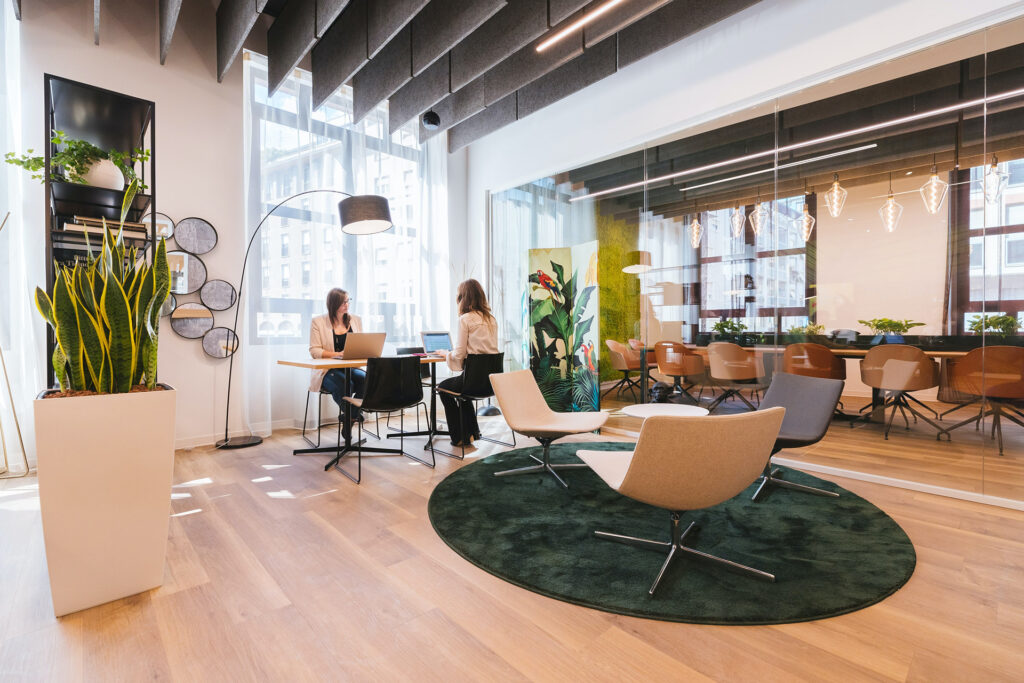
Here, your flooring choices can also be strategic in zoning different areas within the office. For example, you can use distinctive flooring to separate collaborative spaces from quiet work zones. This not only enhances functionality but also aids in wayfinding, ensuring employees and guests can navigate your office intuitively.
Lobby, corridors and reception areas
The flooring in these areas should create a welcoming and competent atmosphere, aligning with your brand image just as you would for any other room in your office. Just because the corridors connect each part of the building, doesn’t mean that they shouldn’t look smart too.
In fact, as the lobby or reception is the first thing visitors will see, it should be durable enough to withstand high levels of traffic and easy to clean so as to maintain a constant appearance of professionalism. Here, you might want to choose between laminate and LVT, or even engineered wood if you want to make a stronger positive impression.
Meeting or conference rooms
This is where many confidential and high-stakes conversations are likely to take place between employees and clients, so it’s easy to understand why flooring design here is key. The flooring materials in these rooms should complement the overall office aesthetic while providing acoustic comfort for effective communication. Again, it should be visually appealing yet practical.
Kitchen areas and bathrooms
In the midst of the buzzing (and sometimes monotonous) office life, the kitchen area is the hidden gem where coworkers gather with a cuppa for a natter to share ideas and refuel for the day’s challenges. Think of the office kitchen as the epicentre of socialising and collaboration, and its flooring as the stage for this daily act.
The perfect office kitchen flooring is not just about withstanding spills and heavy foot traffic; it’s there to reflect the office’s culture. The floor should be easy to clean, water-resistant, and tough enough to endure the constant hustle and bustle.
Similarly, an office bathroom is more than just a functional necessity; it’s a space where professionals refresh, recharge, and rejuvenate. Picture entering this elegant office bathroom where the floor whispers sophistication and cleanliness. The floor should be both practical and aesthetically pleasing, harmonizing with the sleek fixtures in order to impress clients and visitors and keep your employees happy.
Home offices
Compared to the more corporate setting of your on-site workplace, you will typically have more free reign to take design risks at home. Whether that’s a zany colour scheme to keep your mind active during the 3pm slump or the softness of a carpet underfoot to keep things cosy, here no flooring type is off limits.
Just remember, if you are using a swivel chair, a hardwearing floor that won’t impede your movement will be the most ergonomic and cost-effective choice as you roll to and from your desk. For those who have set up a temporary office in the bedroom, consider whether a hard floor is something you really want and envision the long-term future of the space.
What to consider when picking out workspace flooring
We’ve briefly mentioned some of the considerations you should be making as you find the best flooring for your offices, but here is a complete breakdown to ease you through the decision process.
1. Durability: Choose flooring materials that can withstand heavy foot traffic and potential wear and tear.
Tip: Opt for commercial-grade carpet tiles to ensure long-lasting durability.
2. Aesthetics: Consider the overall look and design of the flooring to match your office’s style and branding.
Tip: Select wood laminate for a sleek and professional appearance.
3. Maintenance: Evaluate the ease of cleaning and maintenance required for the chosen flooring.
Tip: Vinyl or linoleum flooring is easy to clean and maintain with regular sweeping and mopping.
4. Comfort: Prioritise the comfort of employees by selecting flooring with adequate cushioning or ergonomic support.
Tip: Opt for a high-quality carpet underlay for additional cushioning underfoot.
5. Noise Reduction: Think about the acoustics and sound insulation the flooring can provide.
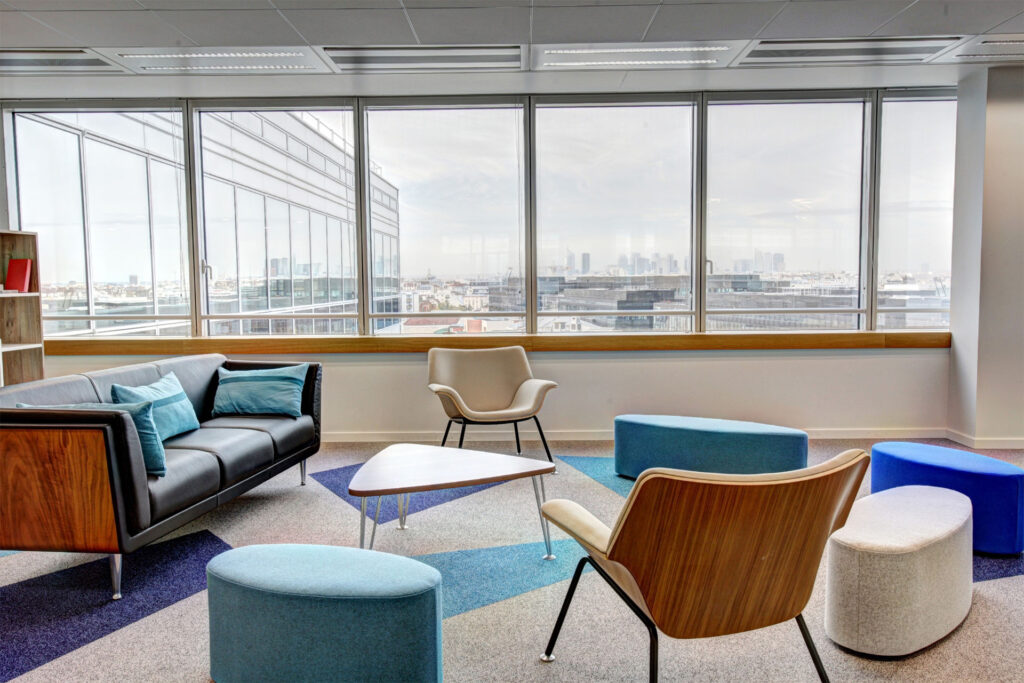
Tip: Carpet tiles with acoustic backing can reduce noise levels in open workspaces.
6. Budget: Determine your budget constraints and choose flooring options that align with your financial plan.
Tip: Consider cost-effective options like engineered hardwood for a polished look without breaking the bank, or opt to install your own carpet to cut costs if you are refurbishing a home office.
7. Safety: Ensure the flooring material is slip-resistant to prevent workplace accidents.
Tip: Non-slip tiles in high-traffic areas can enhance safety for employees.
8. Adaptability: Think about the adaptability of the flooring for potential future layout changes.
Tip: Modular carpet tiles can be easily reconfigured as office needs evolve.
9. Brand Image: Keep your company’s image and branding in mind when selecting flooring to convey the right message to clients and employees.
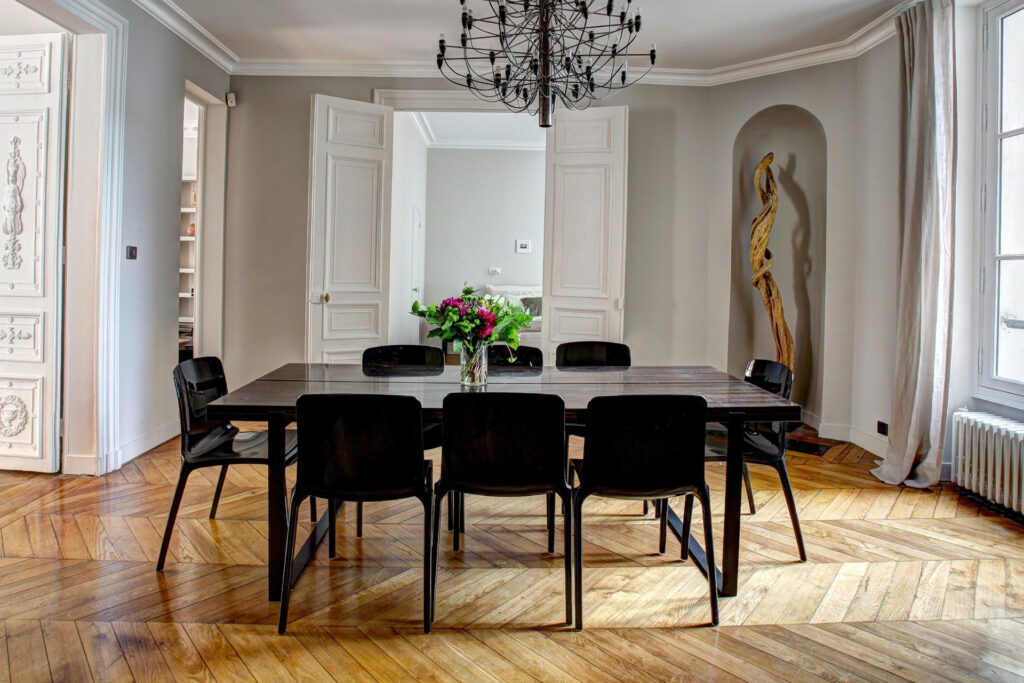
Tip: Herringbone patterns and parquet flooring can reflect a modern and cutting-edge brand image.
10. Installation Time: Factor in the time required for installation to minimize disruptions to your office operations.
Tip: Carpet tiles can be installed quickly with minimal downtime compared to traditional carpeting.
11. Warranty and Lifespan: Review the warranty and estimated lifespan of the flooring to gauge its long-term value.
Tip: Choose a flooring option with a 10-year warranty for peace of mind.
12. Local Regulations: Ensure that your flooring choice complies with local building codes and regulations.
Tip: Check if the flooring material meets fire safety requirements for commercial spaces.
Types of office flooring materials (and their pros & cons)
Carpet
Carpet is a great choice for areas where comfort and sound insulation are essential, such as meeting rooms or collaborative spaces. However, it’s not ideal for high-traffic areas or places prone to spills.
Pros: Carpet is known for its comfort and noise-reduction properties, making it a cosy choice for office spaces. It comes in a variety of colours and styles, offering design flexibility.
Cons: Carpets can be more challenging to clean and maintain, and they may not be as durable as hard flooring options. They are also more susceptible to staining.
Laminate
Laminate is a cost-effective choice for offices with moderate foot traffic, where a hardwood appearance is desired without the expense attached to it.
Pros: Laminate flooring offers the appearance of hardwood at a more budget-friendly price. It’s easy to clean, durable, and resistant to stains and scratches.
Cons: Laminate doesn’t have the warmth and acoustic qualities of real wood. It may not be suitable for very formal or high-end office settings.
LVT
LVT is ideal for high-traffic areas or spaces prone to spills, like kitchens and bathrooms, where aesthetics and easy maintenance are equally crucial.
Pros: LVT combines the look of organic materials such as wood with excellent durability and water resistance. It’s easy to maintain and can be installed in various patterns.
Cons: While it mimics natural materials, it doesn’t have the same resale value as real hardwood or stone.
Engineered wood
Engineered wood is a great choice for upscale offices, boardrooms, or executive suites where a high-end appearance is essential, and there’s a willingness to invest in long-term aesthetics.
Pros: Engineered wood offers the beauty of hardwood with added stability. It can be sanded and refinished if needed, adding a touch of enduring elegance to office spaces.
Cons: It can be more expensive than laminate or carpet, and it’s not as budget-friendly on the whole. It’s also susceptible to moisture damage if not properly maintained.
Consider these material options and their respective pros and cons when choosing the right flooring for your office, keeping in mind the specific needs and demands of your workspace.
It’s time to get to work!
There we have it, all the critical considerations for selecting a new floor for your company or home office. We hope that we’ve proven that an elegant and well-placed floor can revolutionise a dull and lacklustre space into a vibrant, comfortable and energising work environment.
If you still require flooring ideas and advice for your office renovation, please get in touch – and we’ll walk you through your options.