When it comes to parquet flooring, two patterns tend to steal the spotlight: herringbone and chevron. Whilst they share the same timeless appeal, their unique designs can create different aesthetics in any room. So, whether you’re looking to create a clean, contemporary dining space, or maybe a classic and chic living room floor, both options bring their own characteristics. In this post, we’ll get down to the nitty gritty of herringbone vs chevron – exploring their similarities, simplifying what sets them apart, and helping you choose the right style for your space.
Let’s get cracking…
- Chevron Flooring Versus Herringbone: The Similarities
- What Is Chevron Flooring?
- What Is Herringbone Flooring?
- TLDR: Herringbone Versus Chevron
Chevron Flooring Versus Herringbone: The Similarities
Before getting to what sets chevron and herringbone flooring apart, it’s worth noting that these two styles share a few similarities – hence the confusion!
Under The Parquet Umbrella
Both options fall under the umbrella category of parquet flooring, which is a term used to describe any patterned floor composed of a series of uniform wood planks. Such floors have been used for centuries, with chevron and herringbone making appearances as early as the 16th century in the manors and stately homes of the European elites. They still carry luxurious associations with them today, continuing to offer an elegant and striking visual appeal, though they have thankfully become a lot more accessible.
Angular In Structure And Style
In terms of structure and style, they are both constructed by using shorter wooden planks to create a repeated ‘V’ pattern. Such an angular layout brings a sense of drama and dynamism to the floor, making it a focal point no matter where it’s used. As you can imagine, both patterns therefore require precision and skill for a successful installation, making them more costly – both in terms of time and money – than standard floorboards.
Excellent Performance
Performance isn’t a problem for either style, though of course this largely depends on the materials used to construct the floor. If you opt for solid hardwood or engineered wood, as is most common, both patterns are impressively durable and well-suited to high-traffic areas. Engineered wood in particular offers great versatility and can be installed over underfloor heating systems – a feature that makes it especially popular for modern designs. However, with easier installation and a lower cost, LVT and vinyl planks compare well with engineered wood – and they’re becoming increasingly popular for chevron and herringbone designs.
What Is Chevron Flooring?
Now that we’ve explored where the similarities lie when it comes to herringbone vs chevron flooring, let’s break down what make each one unique. First up: chevron flooring.
Design And Structure
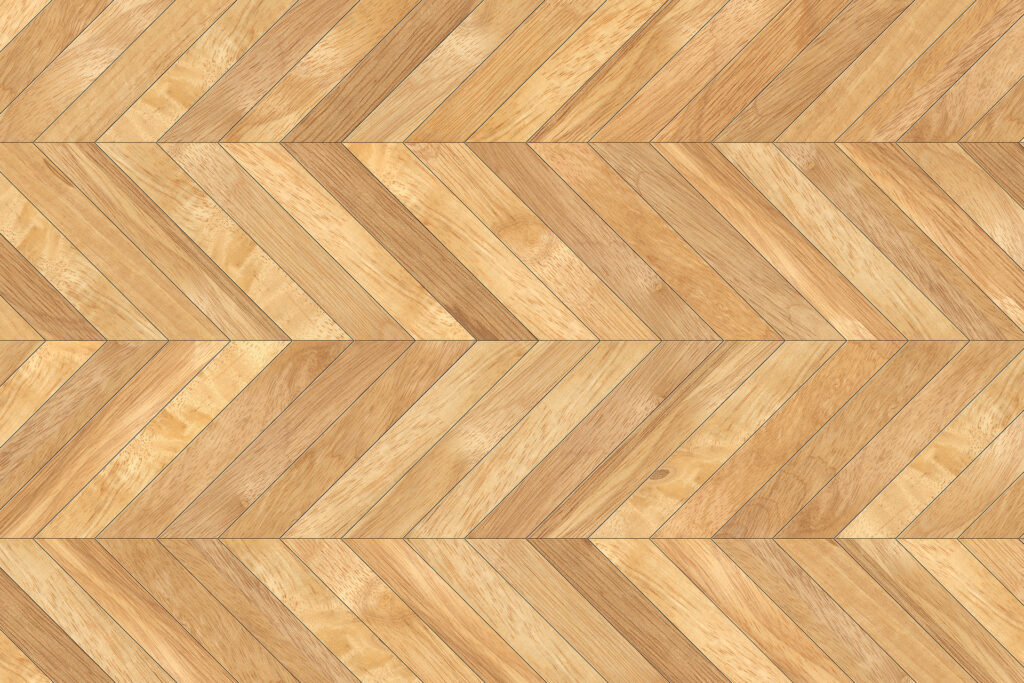
Chevron flooring can be identified by its precise, angular pattern. Each plank is cut at an angle (usually 45˚) so that the ends neatly meet at the bottom of the V shape. Each ‘V’ then aligns perfectly with the next, creating a zigzag effect. Along the middle of each ‘V’ as well as on either side, a straight and central seam runs the entire length of the floor. With crisp and clean lines, chevron is a great choice for modern and symmetrical interiors.
History
Though it often looks right at home in contemporary designs, the chevron pattern has ancient roots in Greek pottery and medieval heraldry. By the 19th century, it began to show up in grand historical buildings and churches to add a touch of elegance and formality. Such a rich history means chevron also lends itself well to seamless classic interiors.
Visuals and Versatility
The dynamic and directional lines in the chevron pattern create a real sense of energy and movement, making it perfect for smaller or narrow spaces which need a little more help on the openness side of things.
Whilst the 45˚ angle tends to be the traditional choice, chevron can be laid at steeper or shallower ‘V’s to create different effects, whether that be relaxed or dramatic. Whilst there are fewer design variations available than herringbone, personalisation is still very much on the cards with a range of finishes, colours, and textures. Some homeowners have even mixed finishes and tones to create a bold and geometric statement floor.
Installation and Cost
Because each plank must be perfectly aligned to achieve the clean ‘V’ pattern as well as the straight seams, chevron flooring can take slightly more precision and cutting than herringbone. Such a meticulous process can influence the cost due to the increased labour requirement. Nonetheless, we think it’s more than worth the effort, particularly in those spaces where polish matters most.
What Is Herringbone Flooring?
Moving to herringbone, let’s explore the key features that make it stand apart.
Design and Structure
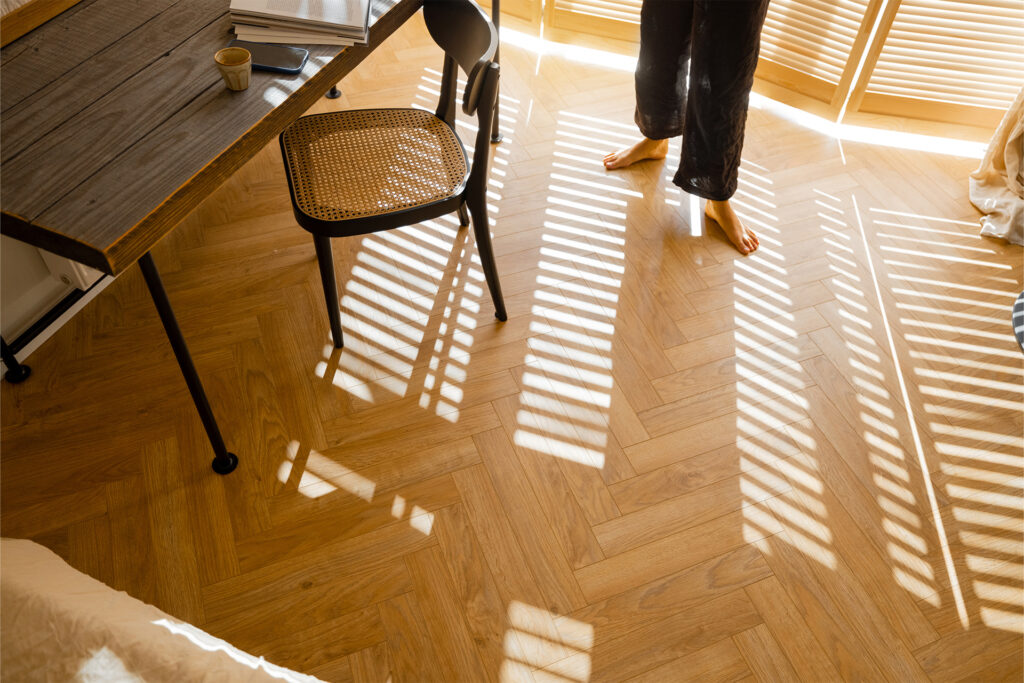
Herringbone flooring is instantly recognisable due to its distinctive broken zigzag pattern, which is created by laying uniform rectangular planks at a 90˚angle to one another. This results in a staggered effect, where the point of the V slightly overlaps, adding texture and asymmetry to the space. Unlike chevron, herringbone doesn’t share the straight seams, meaning that it feels slightly more organic in appearance.
History
Named after the skeletal structure of the herring fish, herringbone has ancient roots, dating back as far as Roman roads where bricks were arranged in a herringbone pattern for added strength. As time went on, like chevron, the pattern found its place in interior design in the 16th century, gaining popularity among the French nobility. One of the earliest examples is the François 1st Gallery at Chateau de Fontainebleu, dating back to 1539 – now that’s elegance.
Visuals and Versatility
Herringbone works well with a wide variety of interior aesthetics. Wider boards in lighter wood options can give a sleek modern effect, whilst narrower planks with deeper hues bring rustic charm. Additionally, numerous variations such as the double herringbone, or herringbone with square inserts can prove perfect for those looking for something more unique and personalised.
Installation and Cost
A practical bonus to herringbone’s asymmetry is that many modern options are available as interlocking vinyl click systems, allowing for easier, adhesive-free installation process. Whilst using these systems makes herringbone much less labour-intensive than chevron, it still requires a keen eye for detail and some planning to get it right. As with most things, the price will depend on the materials and methods chosen, but its enduring appeal makes it a smart and adjustable long-term investment.
TLDR: Herringbone Versus Chevron
Et voila, herringbone vs chevron. As we’ve seen, both patterns have a lot in common: the real difference lies in their visual style and your personal preferences. Whichever you choose, you’ll be adding a feature that’s rich in history, high in style, and sure to bring character to your home – what’s not to love?
Here’s a quick summary to take away with you (or if you didn’t feel like reading this whole post!):
| Feature | Chevron | Herringbone |
| Pattern | Planks cut at 45˚angle for sharp ‘V’ points | Rectangular planks laid at 90˚ angles to form overlapping ‘V’ points |
| Visual Style | Sleek, directional, polished | Textured, timeless, rustic |
| Installation | Typically more precise and time-demanding | Slightly less difficult, especially with vinyl click systems |
| Cost | Slightly more expensive | Generally a little more affordable |
| Customisation | The angle can vary, but customisation mainly through colour and finish | Lots of layout variations available (e.g. double herringbone) |
If you’re still not sure which flooring is right for your home, our friendly Yorkshire team is here to help. Feel free to get in touch! Or, if you’d like more inspiration and installation tips, don’t forget to explore the rest of our blog for all things flooring.